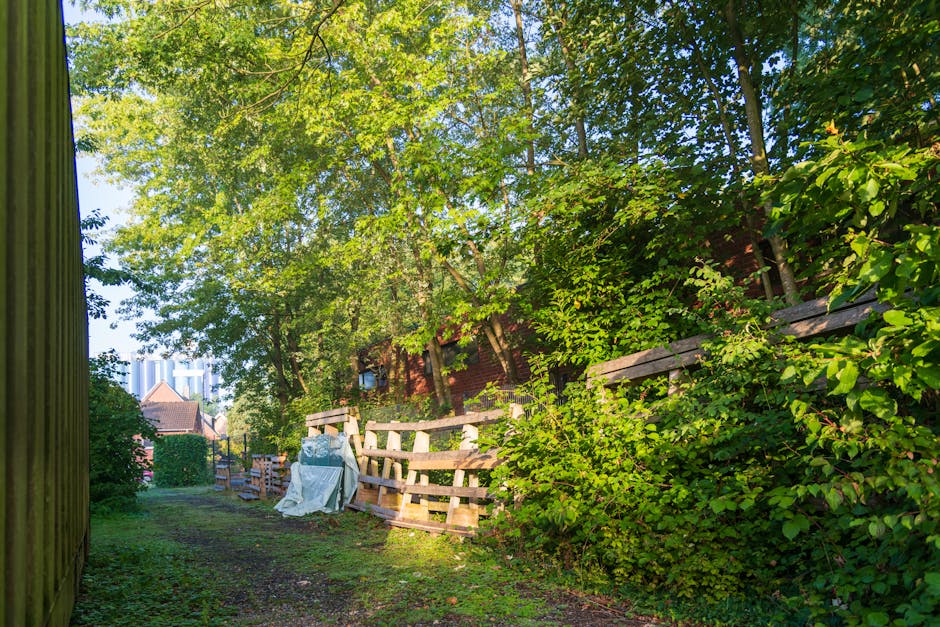
Hayes Lane BR2 Garden Rubbish Collection Bromley: A Practical Local Guide
If you live on Hayes Lane in BR2, garden rubbish has a habit of building up faster than you expect. One weekend it is a few hedge trimmings and a broken planter; the next, you have wet grass cuttings, branches, soil bags, and a pile of old outdoor clutter that feels far too awkward for the bin. That is exactly where Hayes Lane BR2 garden rubbish collection Bromley comes in: a straightforward way to clear green waste and mixed garden debris without turning your driveway, pavement, or shed into a staging area for weeks.
This guide explains how local garden rubbish collection works, what can usually be taken, when it makes sense to book a clearance, and how to avoid the common mistakes that lead to delays, extra costs, or unnecessary hassle. If you want a clean garden, a simpler process, and a result that does not leave you spending half the day lifting soggy bags, you are in the right place.
Table of Contents
- Why Hayes Lane BR2 garden rubbish collection Bromley Matters
- How Hayes Lane BR2 garden rubbish collection Bromley Works
- Key Benefits and Practical Advantages
- Who This Is For and When It Makes Sense
- Step-by-Step Guidance
- Expert Tips for Better Results
- Common Mistakes to Avoid
- Tools, Resources and Recommendations
- Law, Compliance, Standards, or Best Practice
- Options, Methods, or Comparison Table
- Case Study or Real-World Example
- Practical Checklist
- Conclusion
- Frequently Asked Questions
Why Hayes Lane BR2 garden rubbish collection Bromley Matters
Garden waste looks harmless when it starts. A few cuttings here, a broken fence panel there. Then the pile gets damp, heavier, and somehow more annoying every time you walk past it. On a busy residential road like Hayes Lane, that can quickly become more than a visual issue. It can affect access, create odours, attract pests, and make routine garden maintenance feel impossible.
Local collection matters because garden rubbish is not just "stuff outside". It is a practical issue tied to time, storage, safety, and hygiene. Branches can splinter. Wet turf can become slippery. Old compost bags tear. And if you are trying to tidy a front garden, side return, or rear access space, the last thing you want is a long trail of debris being dragged through the house. To be fair, most people do not plan for any of this. It just arrives after a pruning weekend or a little over-enthusiastic landscaping session.
Hayes Lane BR2 garden rubbish collection Bromley is especially useful when you need a tidy outcome quickly and do not want to hire a skip for a relatively small or mixed load. It is also a smart choice when waste includes awkward items such as root balls, wood offcuts, hedge trimmings, mixed bags of soil, or old garden furniture that no longer belongs in the garden at all.
If your project involves more than just green waste, it can help to look at broader waste removal options too, especially if the clearance spills over into sheds, garages, or side passages.
Expert summary: The best garden rubbish collection service is not simply the one that turns up fastest. It is the one that removes the right waste safely, leaves the area tidy, and saves you from handling heavy, messy material twice.
How Hayes Lane BR2 garden rubbish collection Bromley Works
Most garden rubbish collection jobs follow a simple process, but the detail matters. A good service should make it easy to explain what you need, estimate the amount of waste, and decide whether the load is mostly green waste or a broader mixed clearance.
Typical collection process
- Describe the waste clearly. Mention cuttings, branches, soil, bags, pots, broken tools, timber, or any heavy items.
- Share photos if possible. It is not about perfection; it just helps avoid surprises.
- Get a price or estimate. Many services base this on volume, weight, and access.
- Schedule a suitable time. Morning slots can be especially handy if you want the garden back by lunch.
- Clear access where you can. The easier the route from garden to vehicle, the smoother the job.
- Waste is loaded and removed. A professional team should handle the heavy lifting and leave the area swept through.
A proper garden rubbish collection also considers access. Hayes Lane properties may have narrow paths, rear entries, shared access, or parking limitations, and those small details can shape the job more than people realise. If the waste is located in a back garden with a long carry distance, that may affect timing and pricing. It is not a problem, just something to flag early.
In some cases, the job overlaps with other household clearance needs. A shed full of old tools, a garage corner packed with unused pots, or a loft stash of seasonal items can all be handled alongside garden waste if arranged properly. Services such as garage clearance, loft clearance, or home clearance may be relevant when the garden tidy-up turns into a much bigger declutter. That happens more often than you might think.
What is usually collected
- Grass cuttings
- Hedge trimmings
- Leaves and plant matter
- Branches and small logs
- Roots and shrubs
- Soil in manageable quantities
- Old compost sacks
- Plant pots and broken containers
- Damaged garden furniture
- Rusted tools and outdoor clutter
Some loads are straightforward. Others are mixed, damp, and a bit awkward. The more honest you are about what is included, the more accurate the collection can be. Simple, really.
Key Benefits and Practical Advantages
There are good reasons people in BR2 choose collection over trying to do it all themselves. The obvious one is convenience, but that is only part of the story.
1. It saves time and repeated trips
A car boot full of green waste is fine once. By the third trip, it is just irritating. Professional collection removes the need for repeated runs, parking hassles, and loading everything by hand into a small vehicle. If you have branches, heavy sacks, or wet clippings, that alone can make the service worthwhile.
2. It reduces physical strain
Garden waste gets heavier when it is damp. A bag that felt fine on a dry afternoon can become awkward and shoulder-wrenching after an overnight drizzle. Professional collection is especially helpful if you are dealing with bulky items or you are simply not keen on lifting heavy material. No shame in that.
3. It helps keep the property tidy
A clean garden changes the whole feel of a property. You notice the light again, the space opens up, and the place feels easier to maintain. Even a small clearance can make a big difference if you are trying to sell, rent, or just enjoy your outdoor space without looking at a heap of cuttings every time you open the back door.
4. It supports better sorting and recycling
Garden waste is often best separated from general rubbish where possible. Reputable operators usually work with reuse and recycling in mind, especially for green waste streams and recoverable materials. If sustainability matters to you, it is worth checking a provider's approach to recycling and sustainability.
5. It is flexible for mixed jobs
Sometimes the garden rubbish is only part of the story. Maybe the hedge cut back revealed an old sofa cushion left in the shed, or the clearance exposed broken fence panels and builder's offcuts. In those cases, a broader service can make life easier than trying to split the work into separate jobs. If your project includes renovation debris as well, builders waste clearance may be the better fit.
Who This Is For and When It Makes Sense
This kind of service is not just for people with huge gardens. In fact, smaller plots can create some of the messiest clearances because there is less room to stage waste safely.
It makes sense if you are:
- After a big garden tidy-up or seasonal cut-back
- Dealing with branches, hedge waste, and bagged clippings
- Unable or unwilling to transport waste yourself
- Preparing a property for sale, letting, or inspection
- Clearing an overgrown border, patch, or rear yard
- Removing mixed garden clutter, not just green waste
- Working around limited parking or access on Hayes Lane
It also makes sense if you are on a deadline. Maybe a family event is coming up. Maybe you simply cannot face the sight of that pile any longer. Let's face it, some jobs linger for weeks because they are not complicated, just inconvenient. That is exactly where a collection service earns its keep.
For homeowners who are tackling a wider declutter, a combined approach can be sensible. For example, if the garden work leads into clearing old furniture from the conservatory or house, you may also find furniture clearance or house clearance useful alongside the garden job.
Step-by-Step Guidance
Here is the cleanest way to approach Hayes Lane BR2 garden rubbish collection Bromley without causing yourself extra work.
Step 1: Sort the waste into broad types
Separate green waste from anything harder, heavier, or more mixed. Branches, leaves, turf, and clippings are one group. Old plant pots, timber, soil, broken furniture, and tools are another. This does not need to be museum-level precision. Just enough to give a realistic picture.
Step 2: Estimate volume as honestly as you can
A small pile can balloon once it is bagged. Wet hedge clippings are the classic culprit. They compact strangely, and then, a few hours later, they spread out again like they have a mind of their own. If you are unsure, take photos from a couple of angles and include nearby items for scale.
Step 3: Check access before booking
Measure narrow gates, note steps, look at parking, and think about how waste will reach the collection vehicle. If there is a long carry down a side passage or through the house, mention that. Good planning keeps the job smooth and avoids awkward, last-minute reshuffling.
Step 4: Clarify what should be removed
Be specific about the load. For example: "two black sacks of hedge cuttings, several branches, old compost bags, and a broken garden chair." That is much more useful than saying "just some garden stuff." The second version usually leads to questions later.
Step 5: Prepare the area
Move anything you want to keep away from the pile. If there are fragile pots, hoses, or garden ornaments nearby, protect them or reposition them. A minute of preparation can save a lot of small frustration.
Step 6: Confirm timing and payment details
Before the collection day, make sure you understand how pricing works, what happens if the load is larger than expected, and when payment is due. If you want to look at this in more detail beforehand, the page on pricing and quotes is the right place to start.
Step 7: Final sweep and sign-off
A decent service should leave the space tidy, not just empty. That final sweep-through makes the difference between "collected" and "properly finished". Small thing, but you will notice it.
Expert Tips for Better Results
In our experience, the smoothest collections are rarely the most dramatic ones. They are the ones where the details are handled early and clearly.
Tip 1: Bag light material, but do not overpack
Loose clippings are awkward to lift. Lightly bagged waste is much easier to move. But overfilling bags makes them tear and slows everything down. Aim for manageable loads rather than heroic ones. Nobody wins a prize for making the heaviest bag in Bromley.
Tip 2: Keep soil separate if you can
Soil and rubble behave differently from green waste. Even a small amount can change how a job is priced or handled. If there is a lot of soil, mention it upfront so the collection can be planned properly.
Tip 3: Trim long branches before collection day
Shorter lengths stack more neatly and take up less room. If you are cutting back shrubs yourself, a few extra snips can make a big difference. That said, do not overdo it if the branches are already tangled or thorny. Safety first, obviously.
Tip 4: Keep pets and children clear of the work area
A collection day is not the time for wandering about with curious dogs, spades, or little feet underfoot. It sounds obvious, yet it gets overlooked. A clear route makes the job safer and less stressful for everyone.
Tip 5: Ask about mixed waste early
If your garden rubbish includes old furniture, shed leftovers, or domestic clutter, bring that up before the team arrives. It may be fine, but it is best confirmed in advance. That avoids misunderstandings and keeps the quote honest.
Tip 6: Think in terms of finish, not just removal
The real goal is a usable outdoor space. Not merely an empty pile location. If the garden still feels cluttered after the waste is gone, ask yourself what is left behind and whether it should be cleared too. Sometimes the right answer is a more complete clearance rather than a narrow one.
Common Mistakes to Avoid
Some of the costliest problems are easy to avoid once you know what to look for.
1. Guessing the load size too loosely
People often underestimate how much space branches and damp cuttings take up. The load looks tiny on the lawn, then fills half the vehicle once lifted. Be generous in your estimate. It is better to be slightly cautious than surprised on arrival.
2. Mixing every material together
Throwing green waste, soil, timber, and random household rubbish into one heap may seem efficient, but it can slow processing and affect disposal options. A little sorting goes a long way.
3. Forgetting about access
A narrow path, low wall, or awkward parking spot can be the real challenge. If you forget to mention it, the job may still be possible, but it may take longer than expected. And nobody likes avoidable delays.
4. Leaving sharp or hazardous items hidden in the pile
Broken glass, rusted metal, nails, and splintered wood can all create unnecessary risk. If you spot them, separate them or mention them clearly.
5. Choosing the service on price alone
Cheapest is not always best. A reliable team, clear communication, and proper handling are worth more than shaving a few pounds off a job and then dealing with confusion later. Truth be told, a "cheap" job that goes wrong is rarely cheap in the end.
Tools, Resources and Recommendations
You do not need a toolbox the size of a shed to organise a good garden clearance. A few simple tools and sensible habits make the process much easier.
Useful items to have ready
- Heavy-duty garden bags or reusable sacks
- Gloves with grip
- Pruning shears or loppers
- A rake for loose leaves and clippings
- A broom for sweeping hard surfaces
- Tarpaulin for dragging cuttings across patios
- Tape measure for access checks
- Phone camera for quick photos of the load
For larger clearances that involve sheds, furniture, or general household clutter, it is also worth thinking about whether the waste belongs in one category or several. Services such as garage clearance and furniture disposal can be useful when old outdoor items have become mixed with domestic waste.
If the work is more like a full property reset, you may want to look at flat clearance or home clearance options, especially if outdoor and indoor clutter have built up together. It happens. A lot.
For general service information and company background, the pages on about us and insurance and safety are useful for building trust before you book.
Law, Compliance, Standards, or Best Practice
Garden rubbish collection is not just about lifting and loading. It also needs to be handled in a way that respects safety, duty of care, and environmental best practice. You do not need to become a compliance expert, but it helps to know the basics.
In the UK, waste must be handled responsibly and transferred to an appropriate facility. For you as the customer, the practical point is simple: use a provider that treats waste properly, keeps loads separated where needed, and can explain how materials are managed. If a company seems vague about this, that is usually a sign to slow down and ask more questions.
Health and safety also matter. Bags can be heavy. Branches can be sharp. Wet surfaces can be slippery. A careful team should work methodically, use sensible lifting practices, and avoid damaging paths, walls, or planting beds. If you want to understand the provider's approach in more depth, take a look at the health and safety policy.
Another useful standard is transparency. Clear pricing, clear communication, and clear scope are part of good practice, even if they are not dramatic or flashy. A solid service should be upfront about what is included, what is not, and whether the waste contains anything that needs special handling.
Finally, if your garden waste is combined with business premises, rental turnover, or regular maintenance work, the rules of good waste management become even more important. In those cases, business waste removal may be more appropriate than an ad hoc one-off collection.
Options, Methods, or Comparison Table
There are a few ways to deal with garden rubbish. The right one depends on volume, access, timing, and how much lifting you want to do yourself.
| Method | Best for | Pros | Trade-offs |
|---|---|---|---|
| DIY green waste runs | Very small loads | Can be cheaper if you already have transport | Time-consuming, repetitive, physically tiring |
| Skip hire | Large ongoing projects | Useful for heavy or mixed volumes | Needs space, permit considerations, and self-loading |
| Booked collection service | Most household garden clearances | Fast, convenient, minimal lifting | May cost more than self-transport for tiny loads |
For most Hayes Lane households, a booked collection is the neatest middle ground. It avoids the burden of loading everything yourself and is usually much easier than arranging a skip if the project is short, localised, or mixed. If you are clearing only a few bags of clippings, DIY might make sense. If you are facing a bigger, awkward, damp mess on a tight schedule, professional collection is usually the calmer option.
Case Study or Real-World Example
Imagine a typical late-spring tidy-up. A homeowner on Hayes Lane spends a Saturday morning cutting back an overgrown border, removing dead branches, and finally tackling the ivy that has taken liberties along the fence. By midday, the garden looks better, but the waste is everywhere: stacked branches, five heavy sacks of clippings, a pile of old canes, and two cracked pots that were "only temporary" about three summers ago.
The first thought is usually, "I'll sort it tomorrow." Then the rain comes. The bags get heavier. The pile gets muddier. By Monday, it is no longer just a garden job; it is a small obstacle course.
In that kind of scenario, Hayes Lane BR2 garden rubbish collection Bromley solves the problem quickly. The waste is described clearly, access is checked, the load is collected in one visit, and the garden is left ready for a bit of sweeping and a cup of tea. No repeated car trips. No soggy boot lining. No wondering whether that cracked pot should have been saved "just in case".
That last bit is surprisingly common, by the way.
Practical Checklist
Use this checklist before booking collection:
- Have I separated green waste from soil, timber, and household rubbish?
- Do I know roughly how much waste there is?
- Have I checked gate width, steps, and access routes?
- Are there any sharp, heavy, or awkward items in the pile?
- Have I taken a few photos if the load is hard to describe?
- Do I know whether the job is garden-only or mixed waste?
- Have I cleared the route from the waste to the collection point?
- Do I understand the pricing and what might affect it?
- Have I protected any items I want to keep nearby?
- Am I ready for the garden to be swept through after removal?
If you can tick most of those off, the collection should feel much smoother. And honestly, smoother is what you want here.
Quick takeaway: The best garden rubbish collection is planned just enough to avoid surprises, but not so much that it becomes another chore in itself.
Get a free quote today and see how much you can save.
Conclusion
Hayes Lane BR2 garden rubbish collection Bromley is about more than getting rid of cuttings. It is about restoring order, keeping access safe, and reclaiming your outdoor space without turning your weekend into a series of heavy, messy trips. Whether you are clearing after a small prune or a full garden reset, the right collection service should make the job feel straightforward from the first message to the final sweep.
Think clearly about what needs removing, note access details early, and choose a service that handles waste responsibly. That little bit of preparation pays off. The garden looks better, the job finishes faster, and you get that quiet, satisfying feeling when the space finally breathes again. That is a good moment, really.
Frequently Asked Questions
What counts as garden rubbish for collection in Hayes Lane BR2?
Garden rubbish usually includes grass cuttings, hedge trimmings, leaves, branches, roots, small logs, soil in manageable quantities, broken plant pots, and general outdoor clutter. If you are unsure whether something counts, describe it honestly and let the collection provider confirm.
Can mixed garden waste and old furniture be collected together?
Often yes, but it depends on the type and amount of material. Mixed loads are common, especially when clearing sheds, patios, or conservatories at the same time. In some cases, a broader service such as furniture clearance is more appropriate.
How do I estimate how much garden waste I have?
Take a few photos from different angles and include a familiar object for scale, like a bin, chair, or wheelbarrow. Wet cuttings compact tightly, so it is usually safer to slightly overestimate than to underestimate.
Is it better to bag garden waste before collection?
Yes, if the material is light enough to handle safely. Bagging clippings and leaves helps keep the area tidy and makes loading easier. Just avoid overfilling the bags because they can split or become too heavy to move comfortably.
Do I need to be at home for the collection?
That depends on how the service is arranged. Many people prefer to be present at least at the start so they can confirm the waste and access. If you will not be there, make sure the instructions are clear and the waste is easy to identify.
What if my garden waste includes soil or rubble?
Soil, stones, and rubble are usually handled differently from green waste. Mention them early because they can affect pricing, loading, and disposal planning. This is one of those details that looks small until it is not.
How quickly can garden rubbish be collected?
Timing varies by availability and job size. Some clearances can be arranged quickly, especially if access is straightforward and the waste is well described. If the job is bigger or mixed, a little more lead time is helpful.
Is garden waste collection suitable after landscaping work?
Yes, very often. It is a sensible choice after pruning, turf lifting, hedge cutting, planting, or light landscaping. If the project includes construction debris as well, you may need a service that also covers builders waste clearance.
What should I do before the team arrives?
Clear a route, separate the waste if possible, move items you want to keep, and make sure access is workable. A small amount of preparation can save time and reduce the chance of mistakes.
Is garden rubbish recycled or reused?
Where possible, yes. Green waste is often managed separately from general rubbish, and responsible handling should support recycling or recovery routes. If sustainability matters to you, ask about the provider's approach before booking.
Can a garden clearance include shed or garage items?
It can, if arranged that way. Many people discover old tools, pots, broken furniture, or stored clutter while clearing the garden. If that happens, a linked garage clearance or home clearance may be a better fit than a garden-only collection.
How do I know if I need a collection service instead of doing it myself?
If the waste is heavy, bulky, damp, awkward to transport, or simply too much for one vehicle load, a collection service is usually the calmer choice. If you only have a few light bags and easy transport, DIY may be enough. The right answer is the one that saves you time and leaves you with less hassle, not more.
For a cleaner outdoor space, a simpler day, and less lifting than you expected, thoughtful planning goes a long way. And once the pile is gone, you will probably wonder why you waited so long. It happens all the time.